Nausea
Ambidexter Gallery, Istanbul, 2024
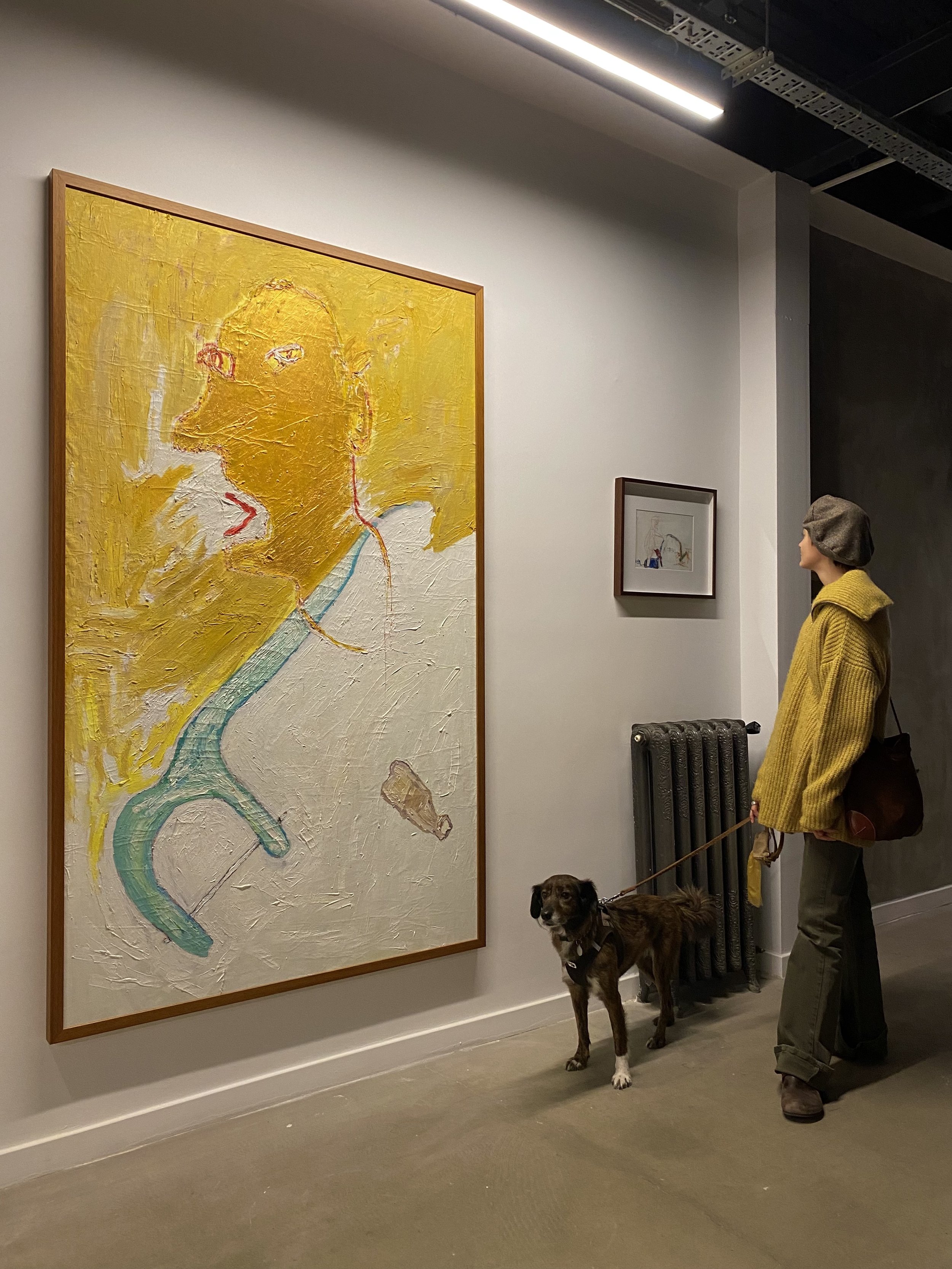
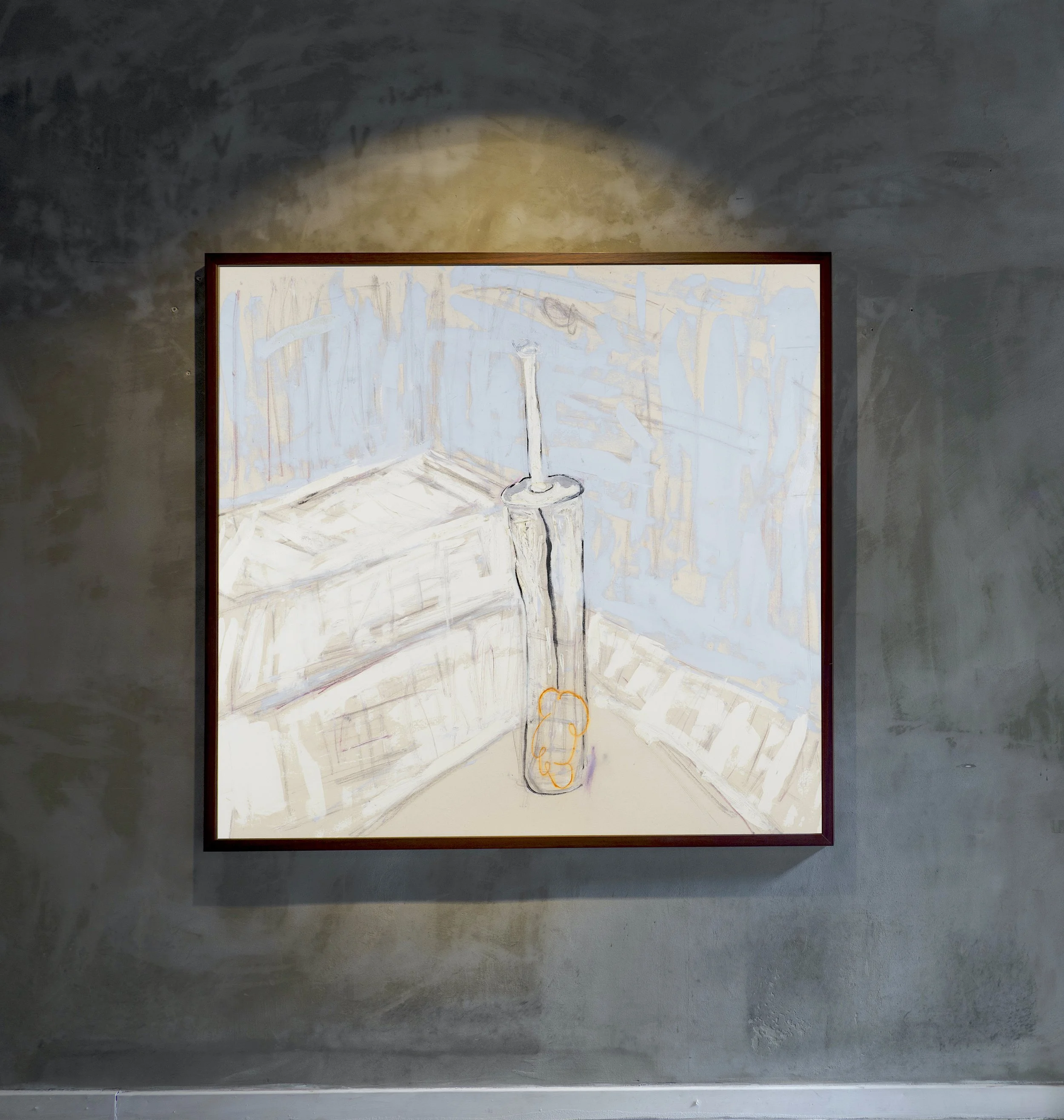
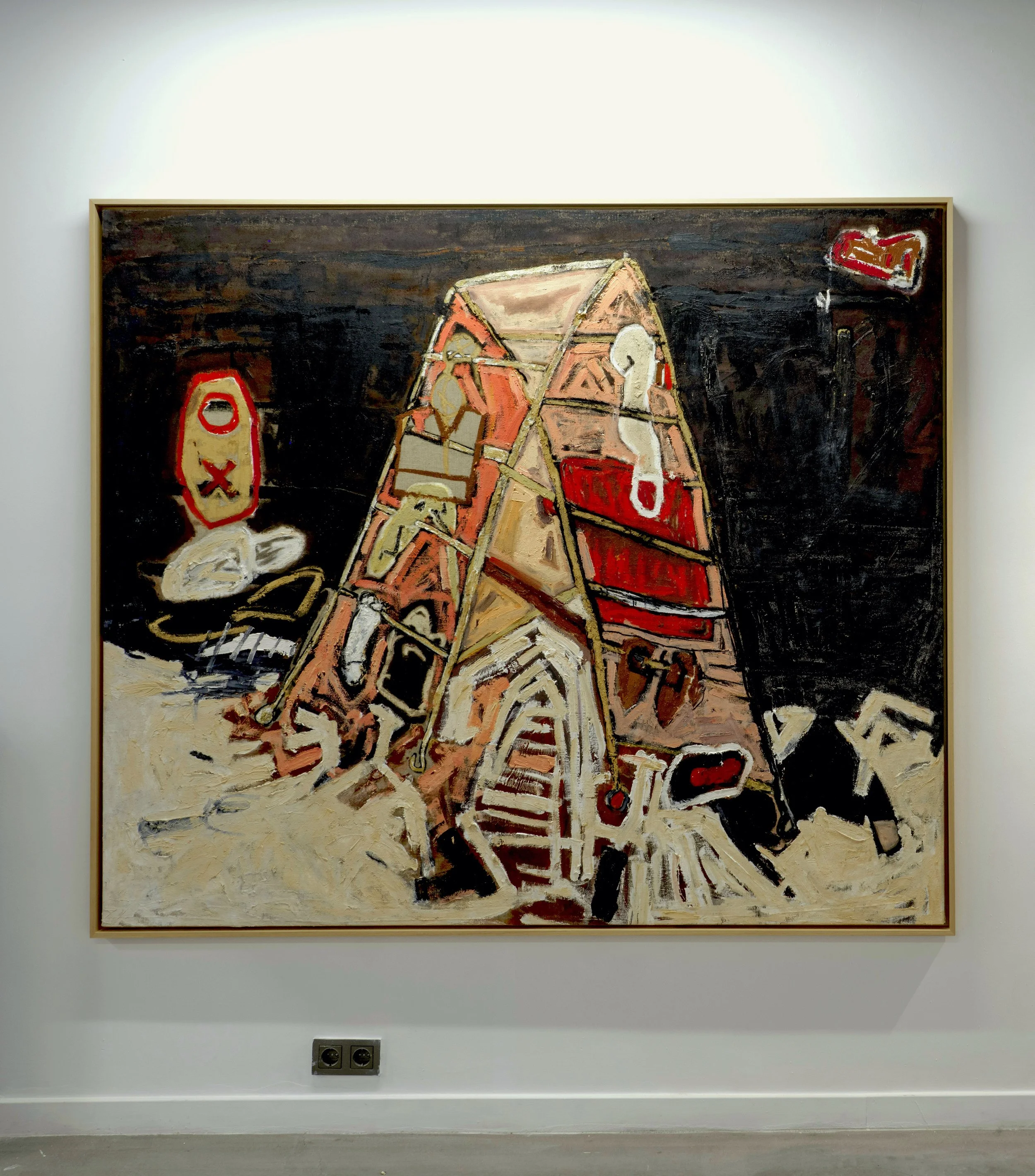
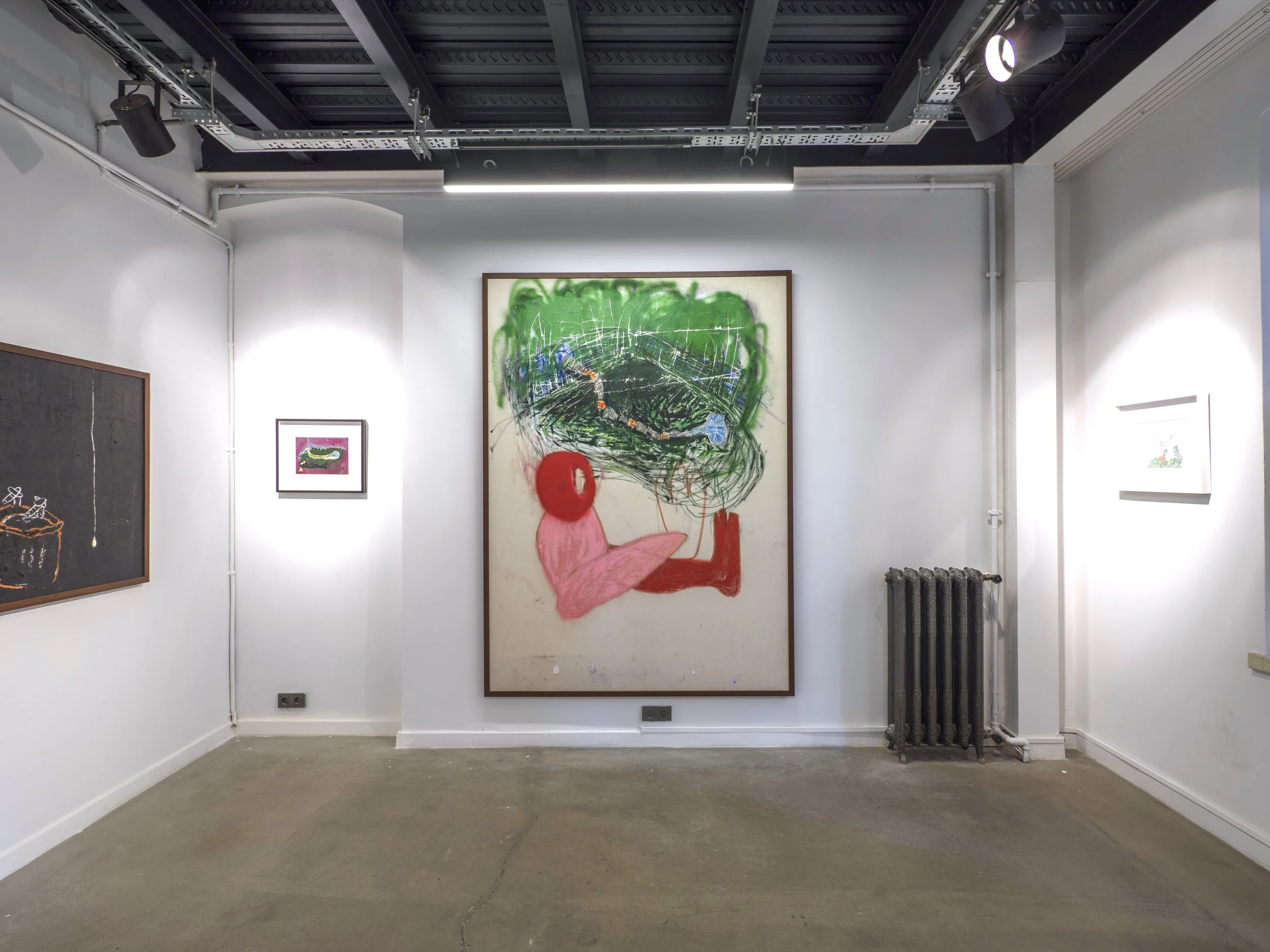
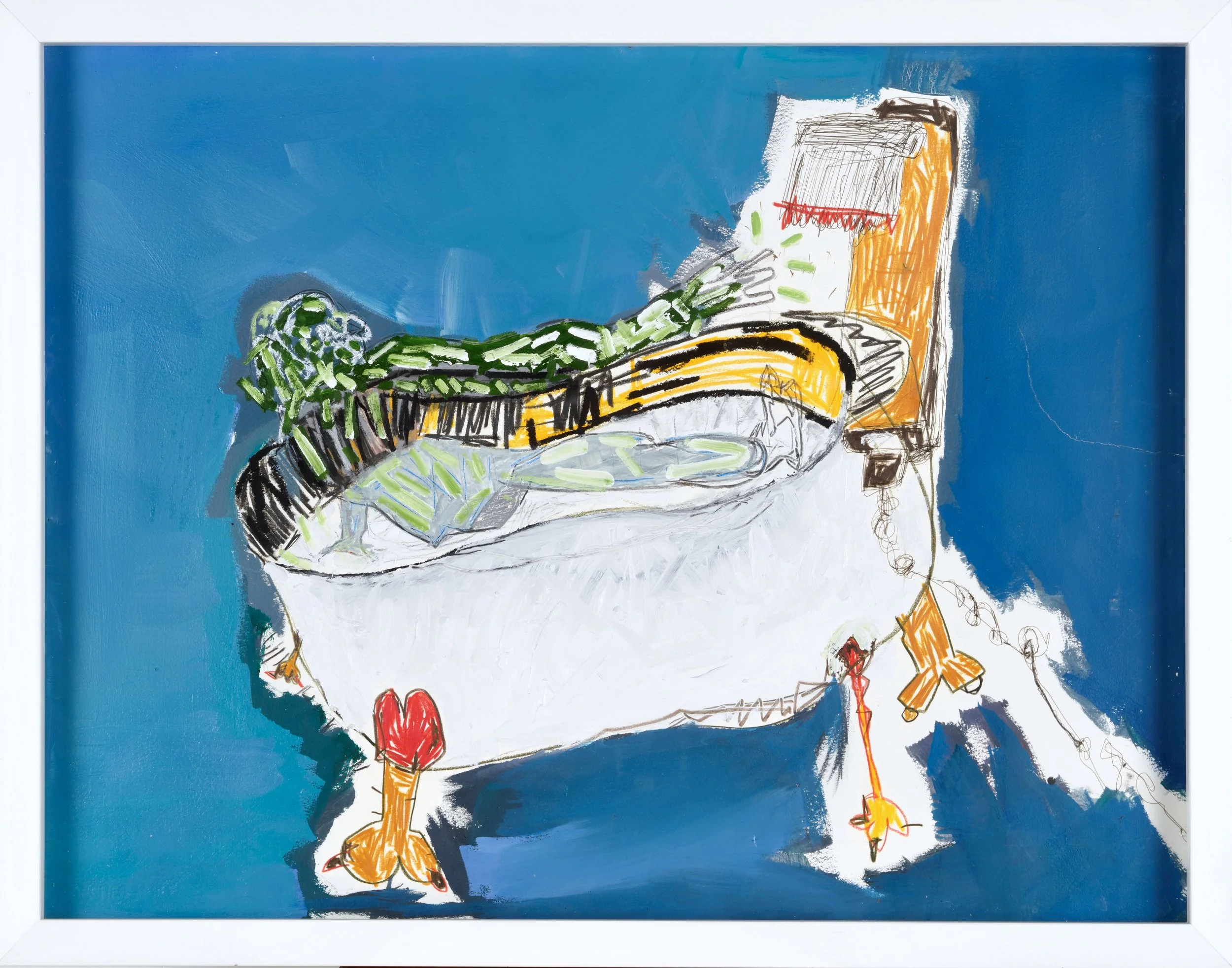
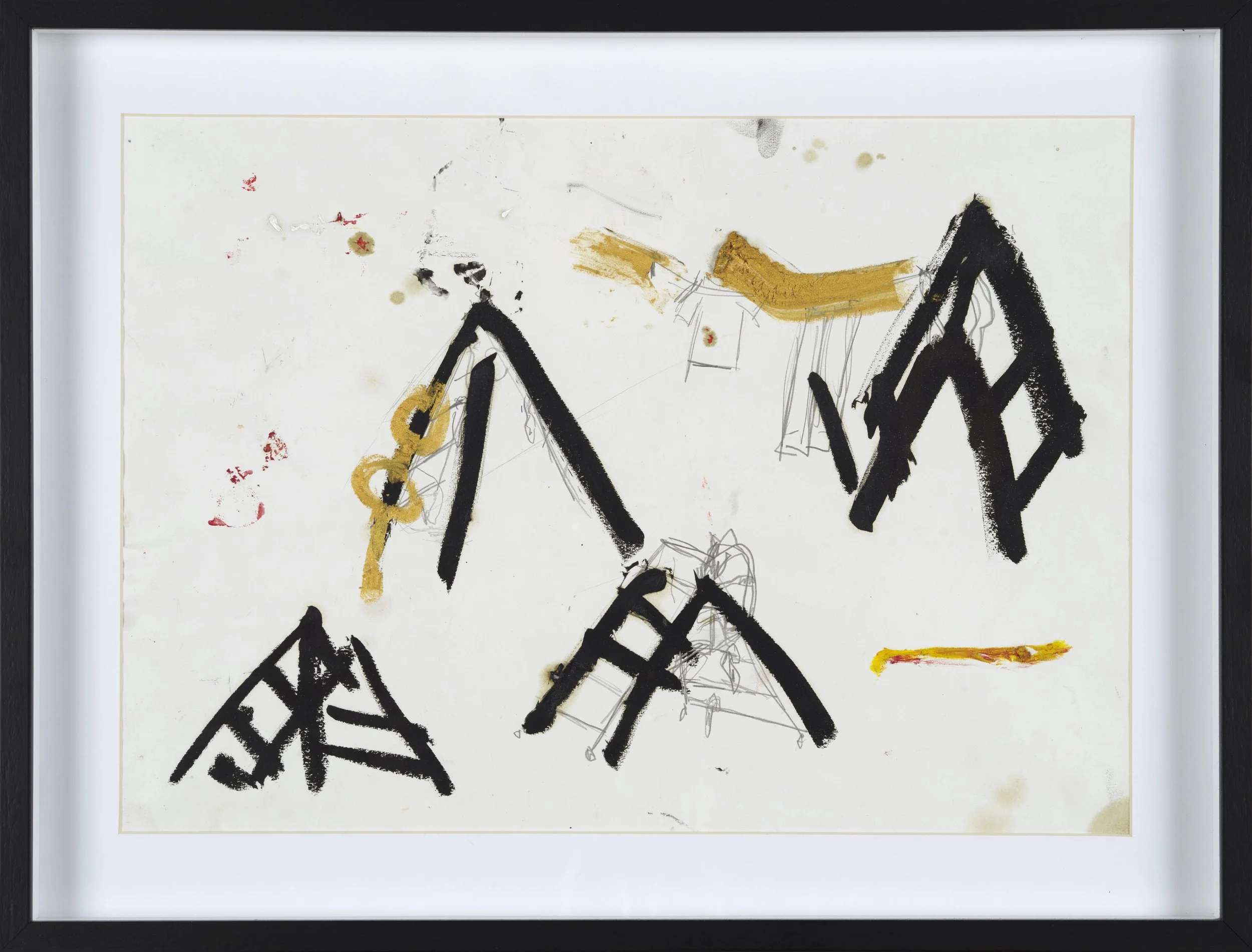
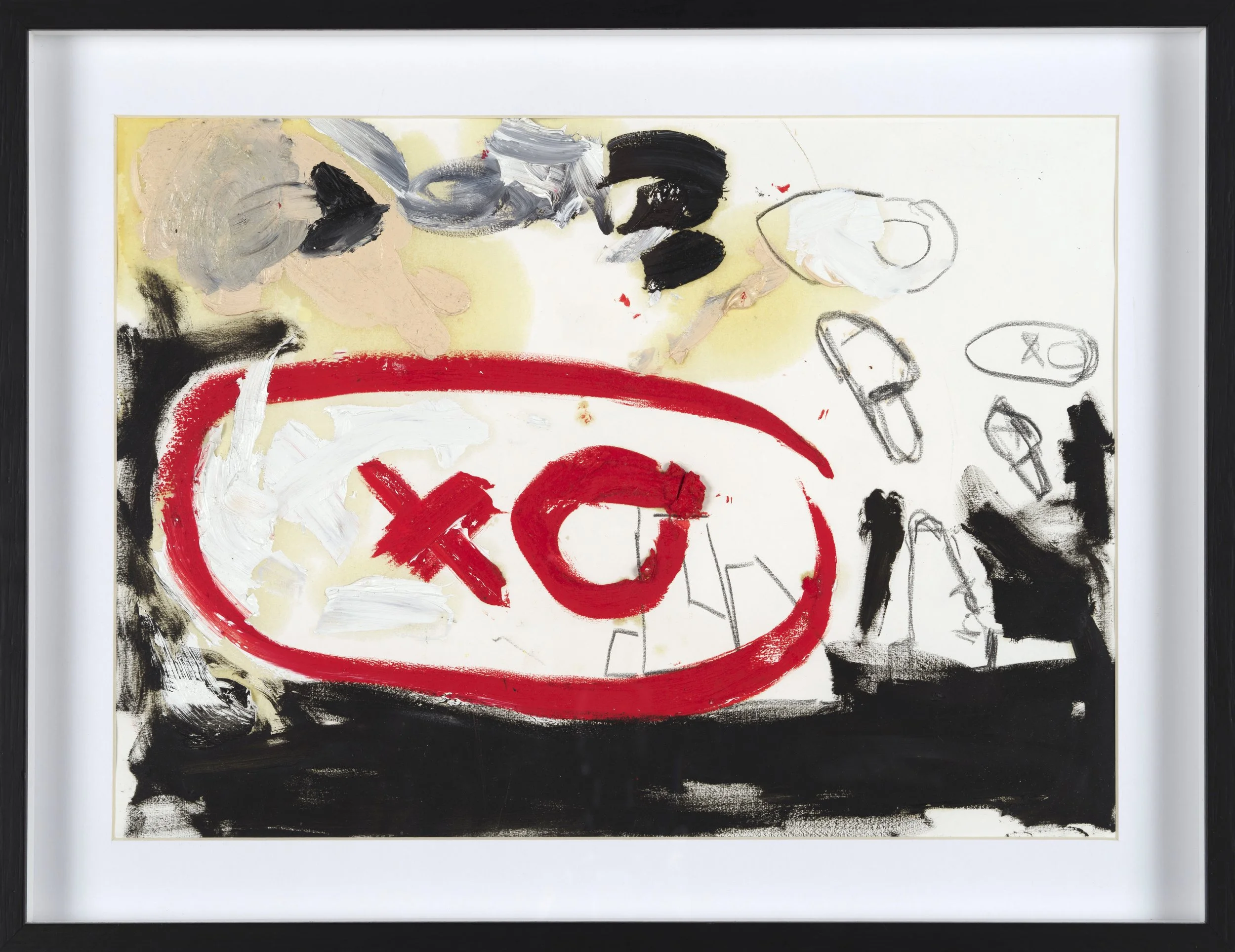
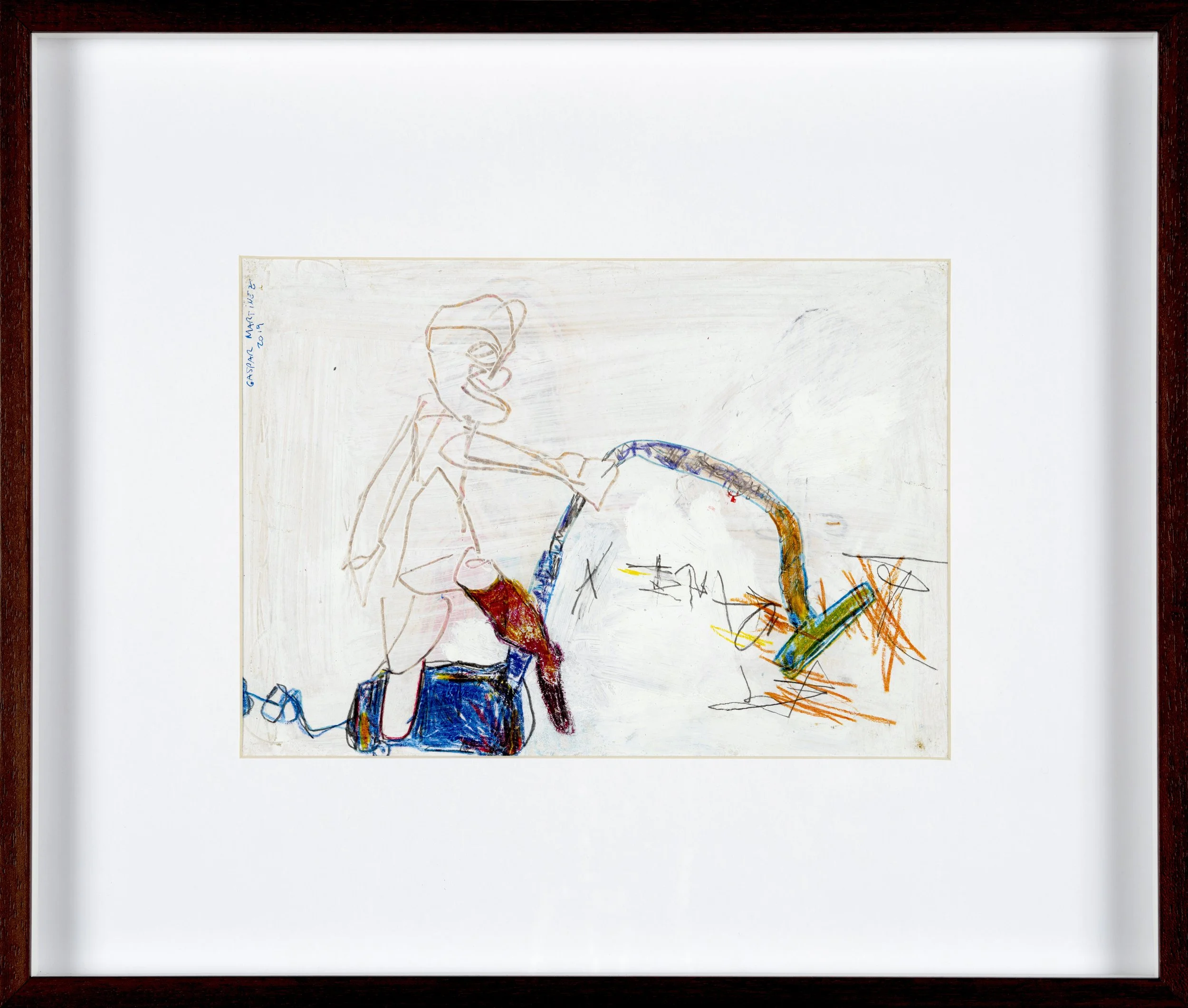
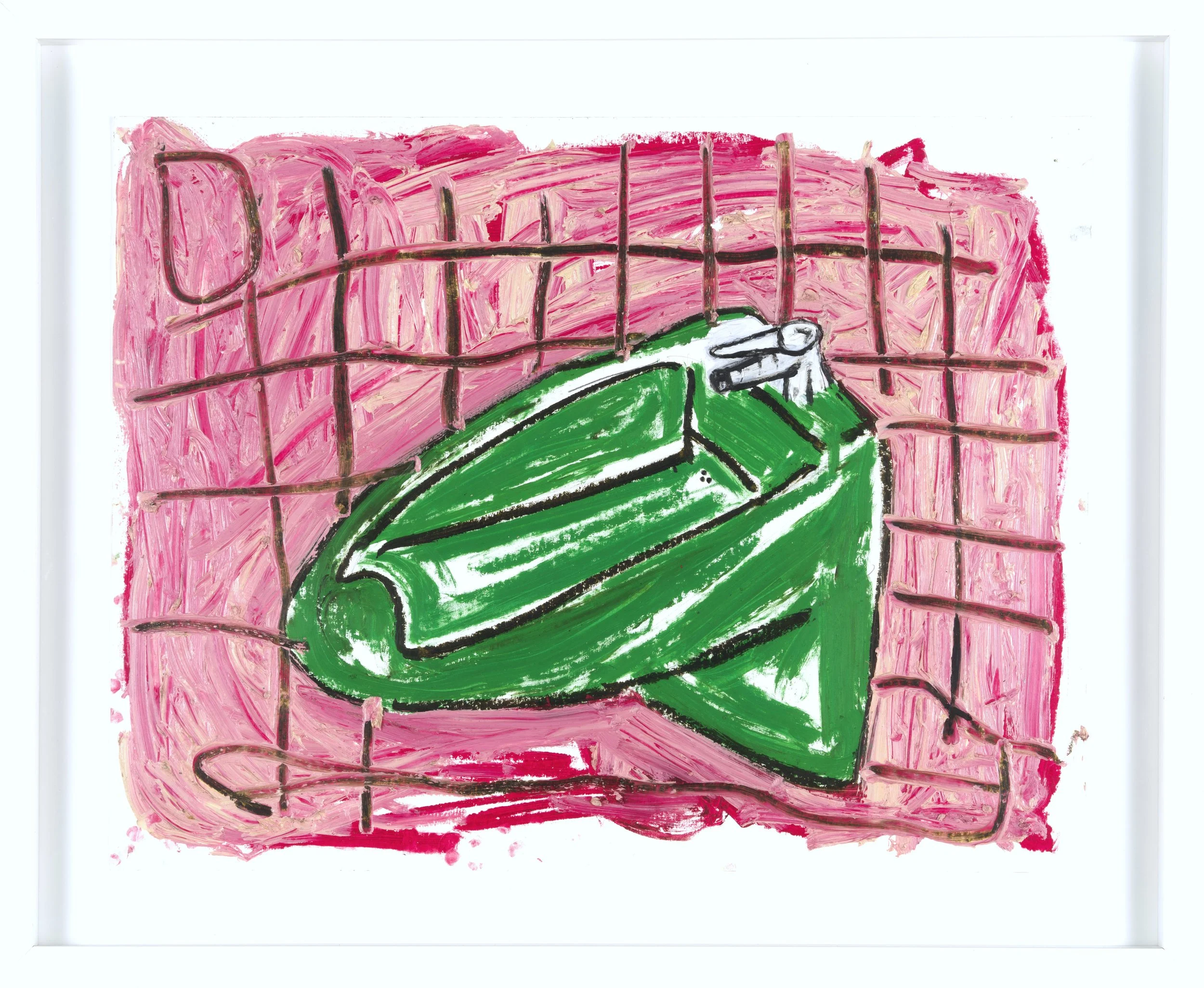
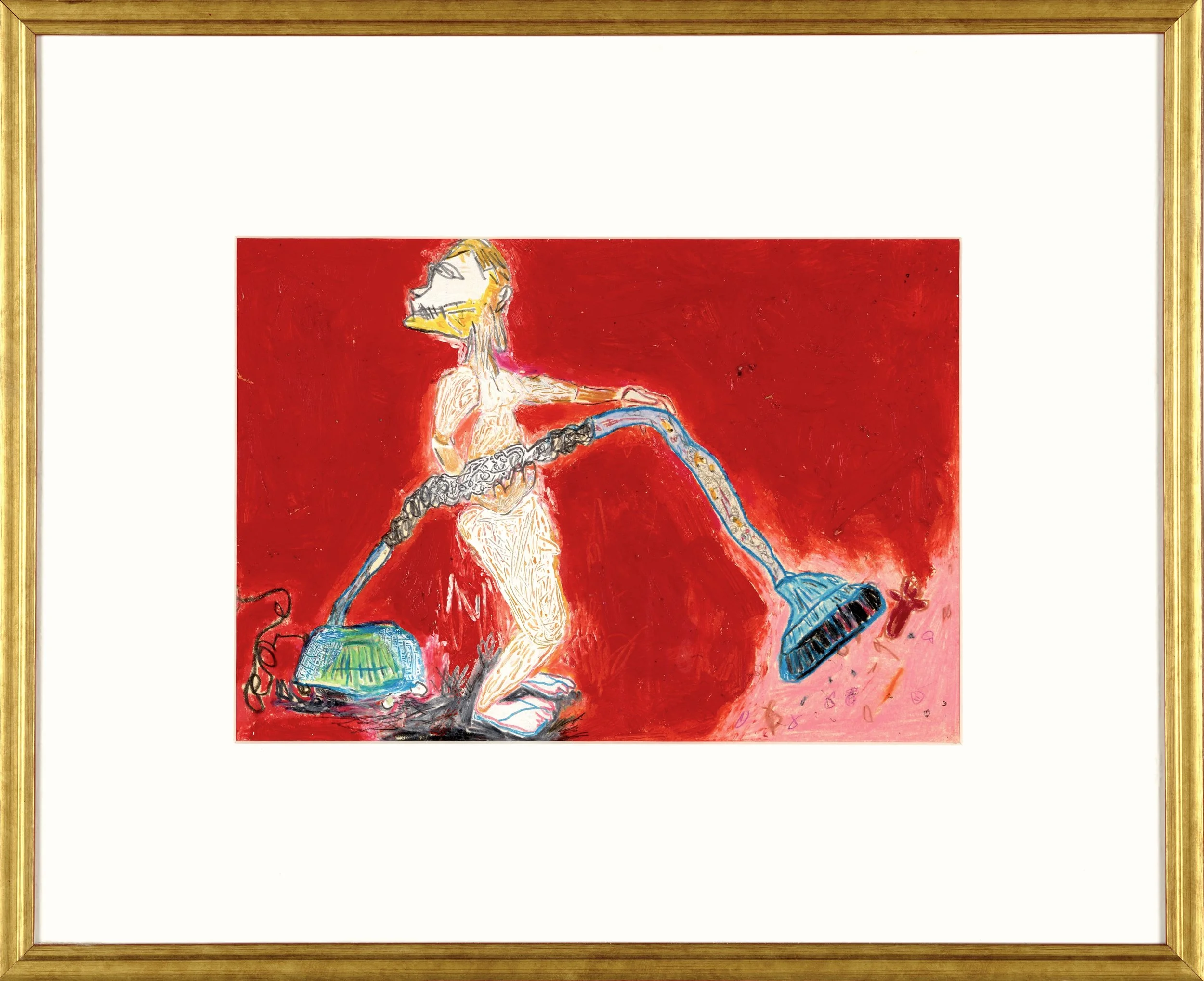
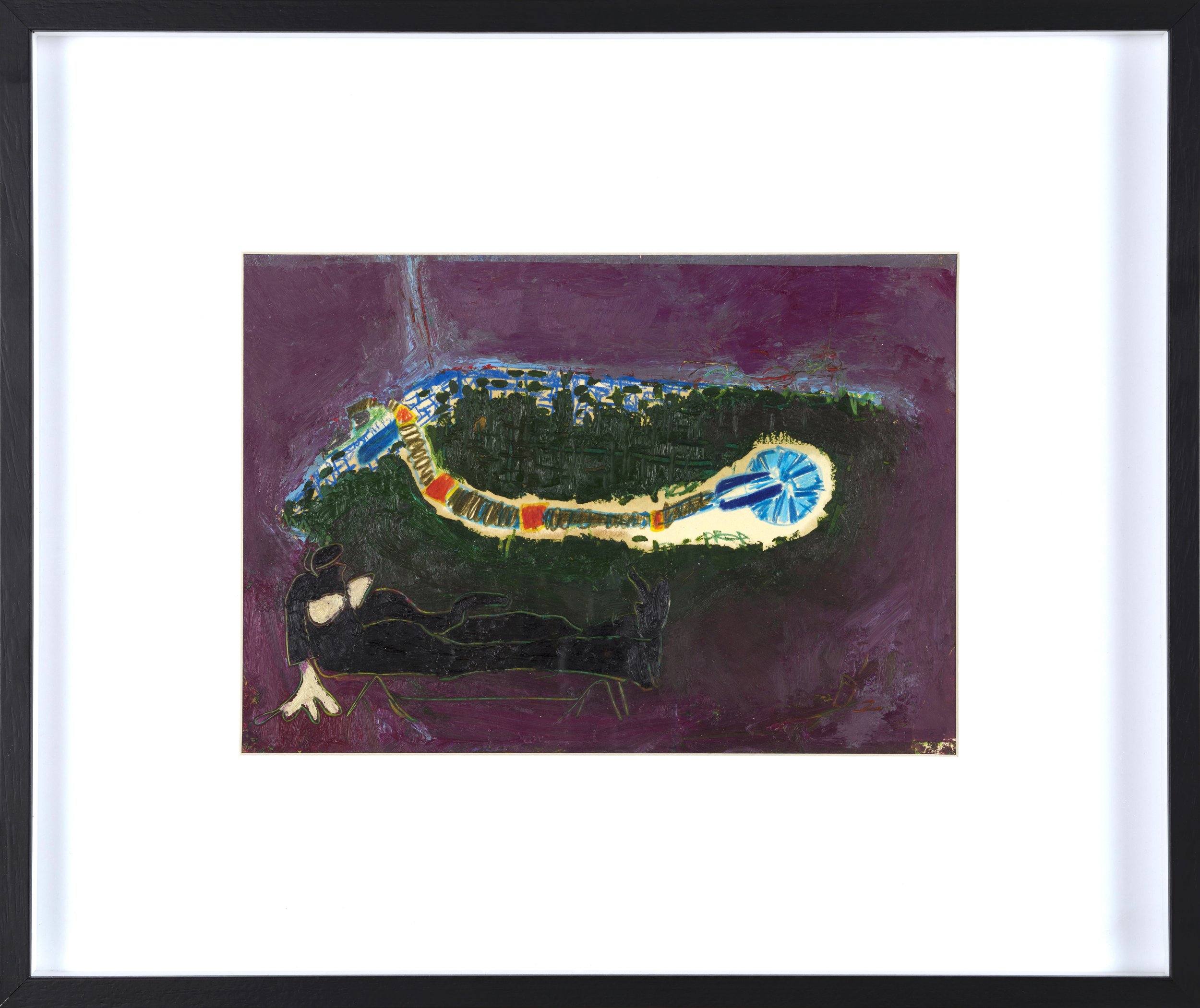
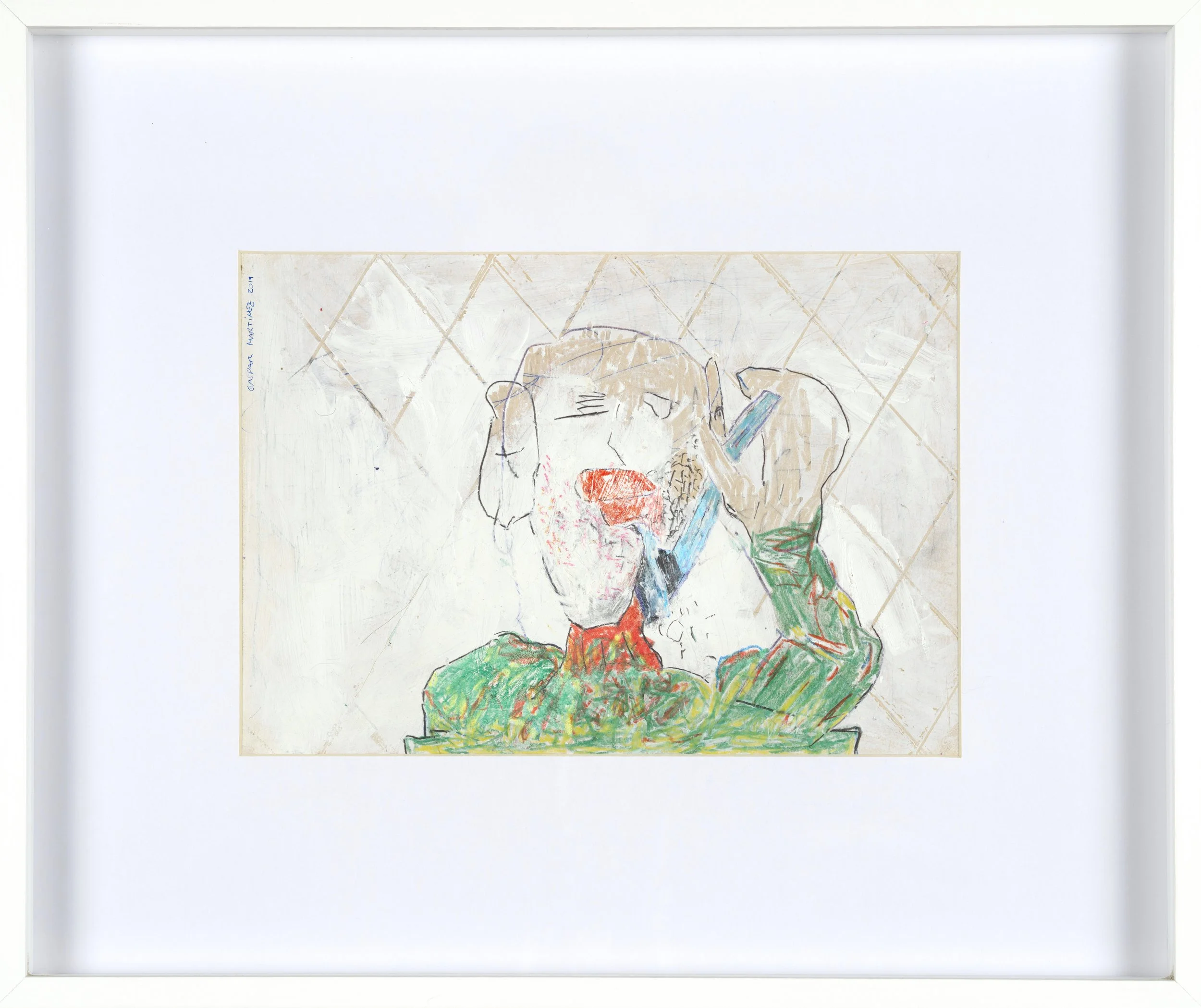
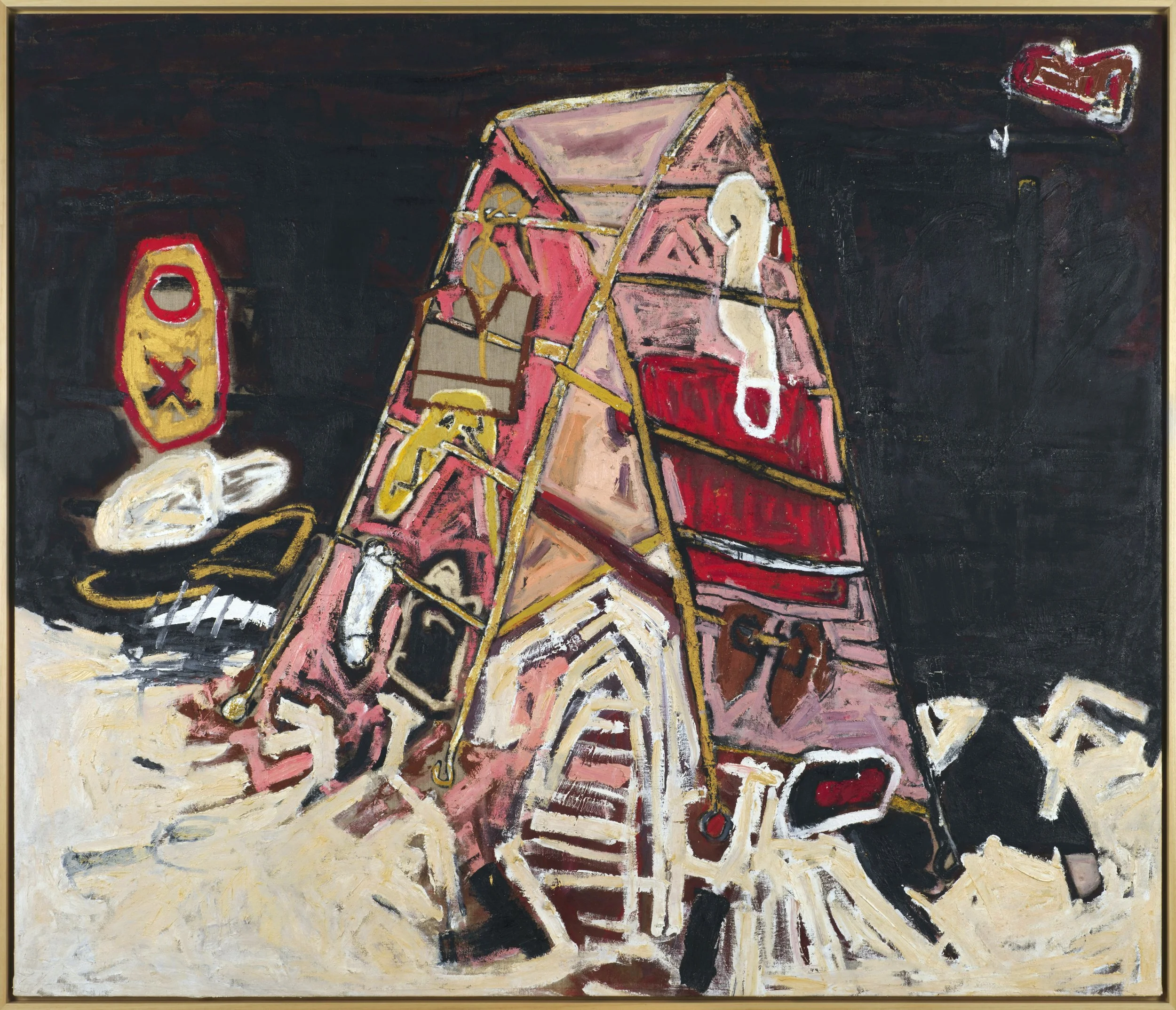
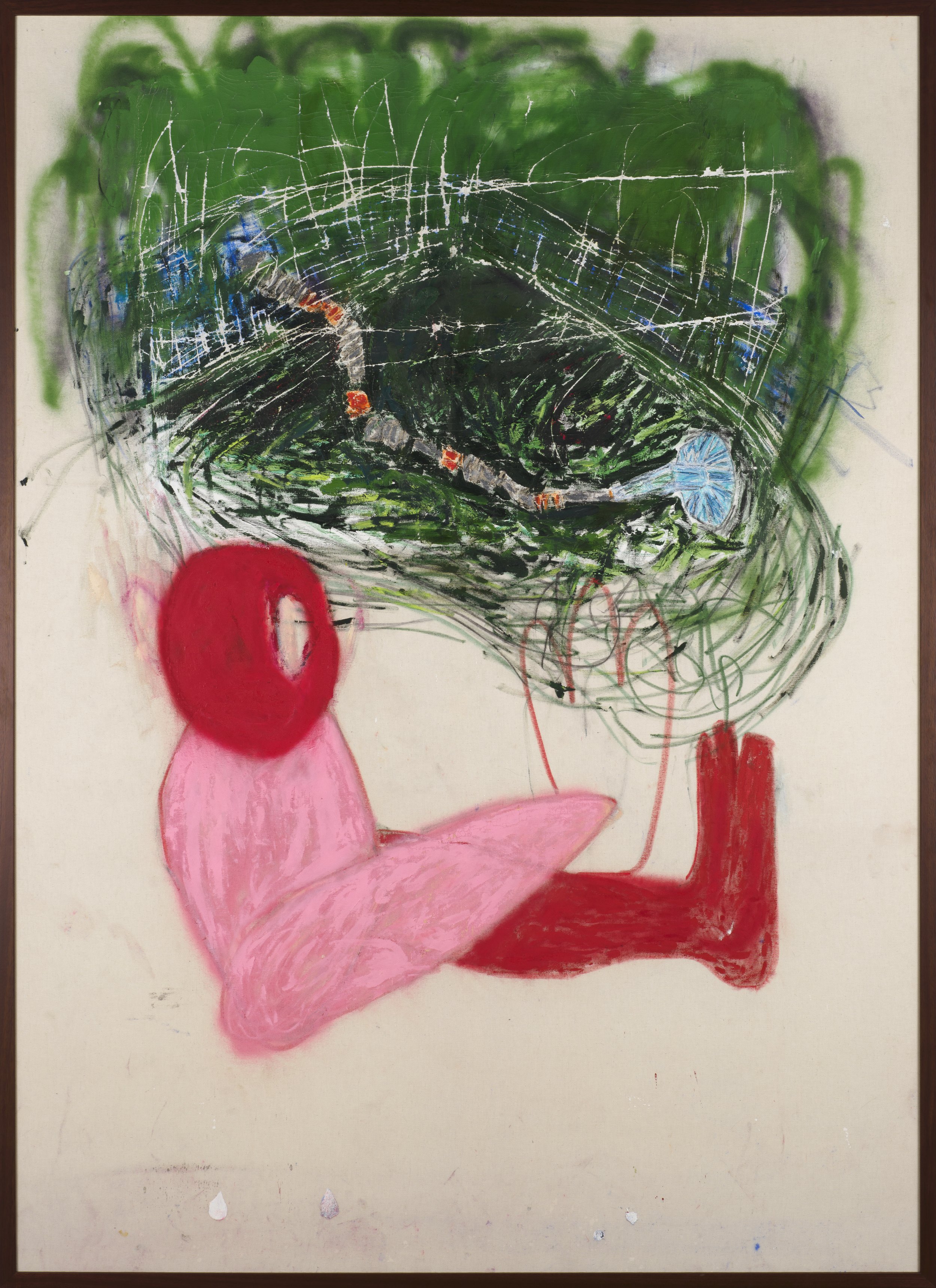
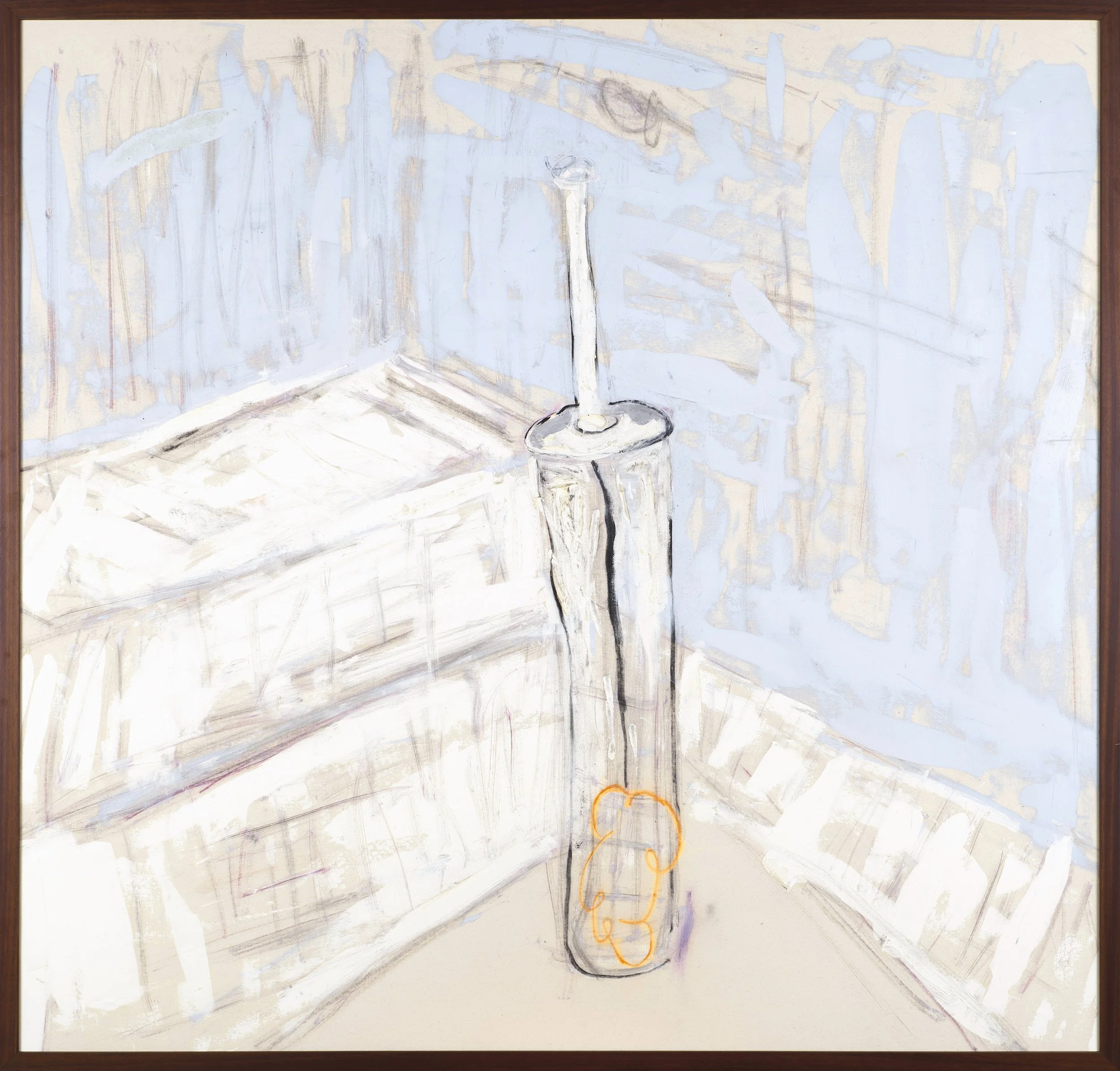
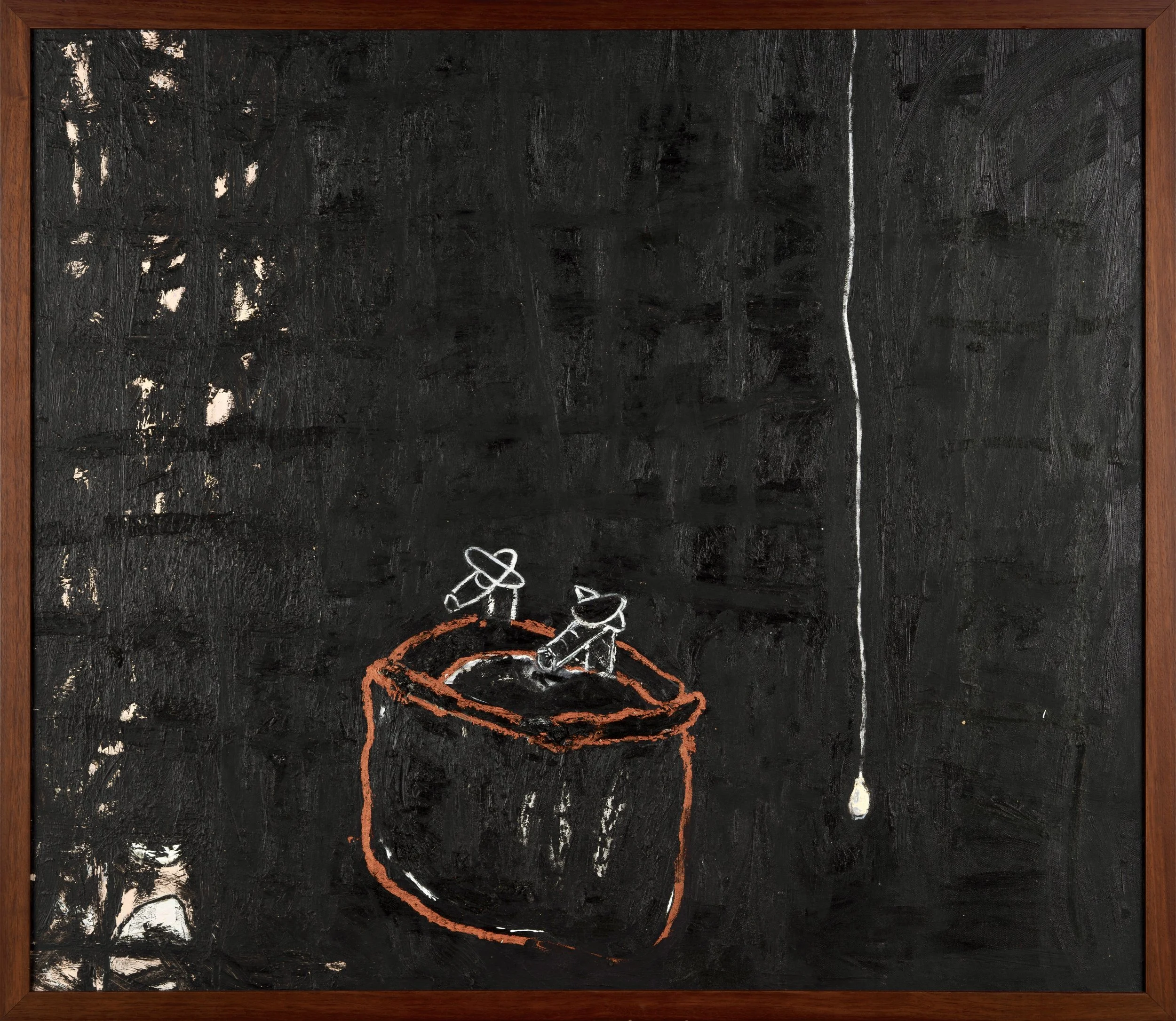
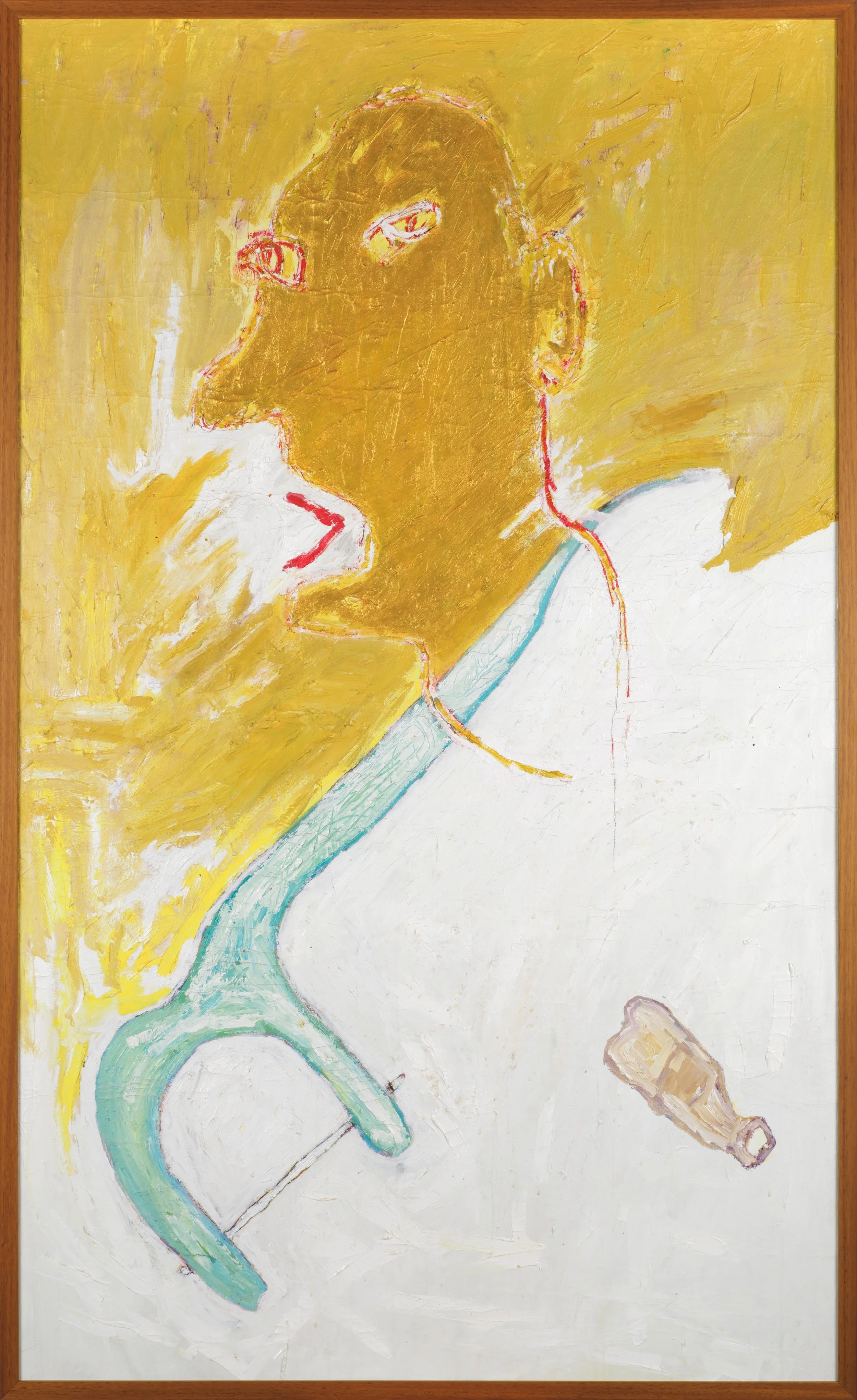
Gaspar Martinez has a painterly tendency to couple energetic, gestural mark-making, bold line work, vibrant palettes, sparely textured surfaces, and variably quirky compositional choices with a quietly humorous, subtly critical sense of curiosity. His subjects of playfully abstract representation have been fgures and things, places and rooms, objects real and imagined, and formal riffs on explorations of color and geometric abstraction. In Nausea, the London-based Argentinian painter coheres most all such expressive means and modes in a body of work merging notions of distaste, disgust, and questionable utility with ideals of rather improbably sourced joy, grace, and beauty.
This is how we fnd ourselves not repulsed at all by a large painting of a toilet brush, towering and teetering in the corner of a powder blue washroom, rather unexpectedly charmed by it. This is why we look at a nimbly drawn rendering of an orange-lined toilet tank in a shadowclad water closet and see the dangling fush cord and baby blue faucets as not even slightly unpicturesque, but instead familiarly tangible, even strangely friendly. We might not have imagined tracking down the home of an old man we don’t know so that we can ask to have a peek at his lovely bidet, but we might want to do precisely that upon seeing Martinez’s treatment of one of these peculiarly shapely bathroom features in brilliant, gleaming green, jutting out from a goofly gridded wall of earthy red tiles.
As with the hoovers, drying racks, pool cleaners, bathtubs, dental foss, razors, and beard trimmings featured in other works, Martinez found himself initially disgusted by all of the toilet related objects, only to then be increasingly intrigued by them. His subjects are items of physical upkeep and personal hygiene that are so quotidian we might hardly notice them, unless we fnd them distasteful or gross, whereby we’re not wont to shower them with aesthetic attention, curiosity, and pathos. Moreover, they’re such commonplace objects of domestic existence that it’s easy for their formal or design-related beauties, in some cases, to escape our notice, or for their unnecessary clunkiness or stupidity of perceived convenience to not register in our minds, even as we use them. All the same, the artist is no more interested in conveying puerile bathroom humor than he is in making claims about the ills of consumerism. His implicit statement with these works is of a much simpler sort: These objects might be disgusting, wonky, or easy to ignore, but they’re also extremely interesting to paint and, as it turns out, quite surprisingly engaging to look at in paintings.
Martinez takes the title for his show, Nausea, after the eponymous novel by French philosopher Jean-Paul Sartre. It tells the tale of Antoine Roquentin, a peevish, embittered protagonist whose solitary life and general despondency leave him sensing existential dread and meaninglessness everywhere, including in the most mundane objects of his everyday surroundings. But Martinez wasn’t inspired by the book to make the paintings; he discovered it only after several of the works were underway. This thematic coincidence convinced him to continue his painterly exploration of how certain things might nauseate or disgust us – or at best, seem patently uninteresting – while also eliciting feelings of pleasure or joy. Consider this as you view Martinez’s works. Enjoy the latent nausea of his curiously pleasing show.
Essay by Paul D’Agostino*.
*Paul D’Agostino is an artist, writer and curator.